If you’re moving to Arizona, you’ll eventually face the friendly rivalry: Tucson or Phoenix? They’re only about 115 miles apart, but they feel like different worlds. We work in the Tucson market, so we’ll be upfront about our home turf — but here’s an honest, balanced look at how the two compare so you can pick the right fit.
Home prices and value
This is where Tucson makes its strongest case. The Tucson-area median sale price sat around $355,000 in the first half of 2026, meaningfully below the Phoenix metro, where prices run well higher across most comparable neighborhoods. For the same budget, buyers often get more home, more lot, or a better location in Tucson — and even the luxury tier (Foothills, Dove Mountain) trades below equivalent Scottsdale or Paradise Valley addresses. If stretching your housing dollar matters, Tucson tends to win.
Update (September 22, 2026): the $355,000 figure is a first-half-2026 reading of the overall market, left as published. We now keep current figures per area rather than as one Tucson-wide median. Over the twelve months to September 22, 2026, MLS of Southern Arizona median sale prices ran from $300,000 in Green Valley, $328,500 in the Tucson Mountains and $340,000 in Sahuarita, through $350,000 in Midtown Tucson, $400,000 in Vail and $422,500 in Marana, to $500,000 in Oro Valley and $660,000 in the Catalina Foothills. Every area’s current report is on our market pages.
Size, pace, and vibe
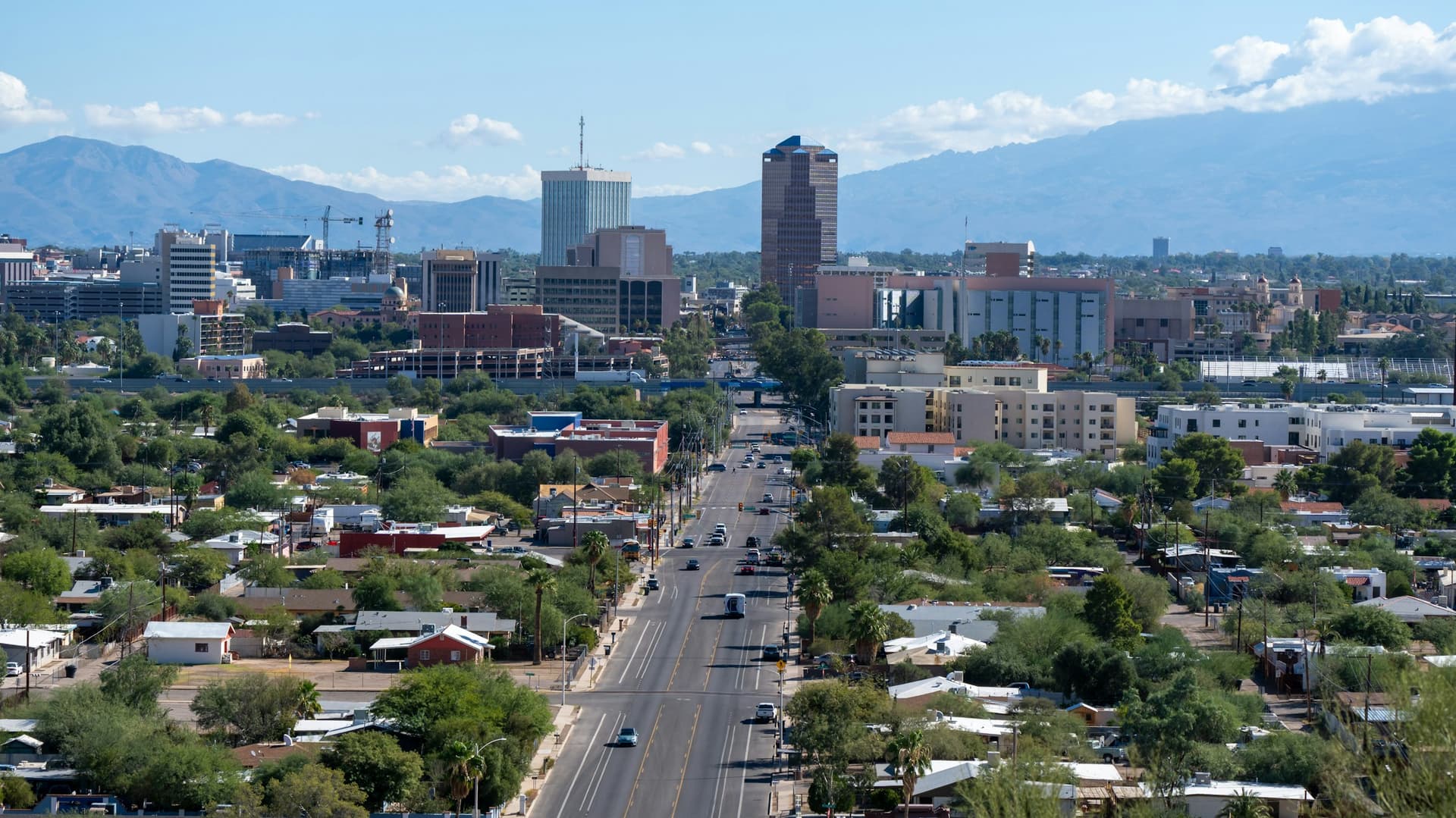
Phoenix is a sprawling metro of roughly five million people — big-city amenities, major professional sports, a huge international airport in Sky Harbor, and endless dining, shopping, and nightlife. Tucson is about a fifth the size, anchored by the University of Arizona, with a more laid-back, artsy, college-town character and deep Sonoran and cultural roots. Phoenix feels like a major metropolis; Tucson feels like a connected, walkable-in-pockets city where the desert is always close. Neither is “better” — they simply suit different temperaments.
Climate
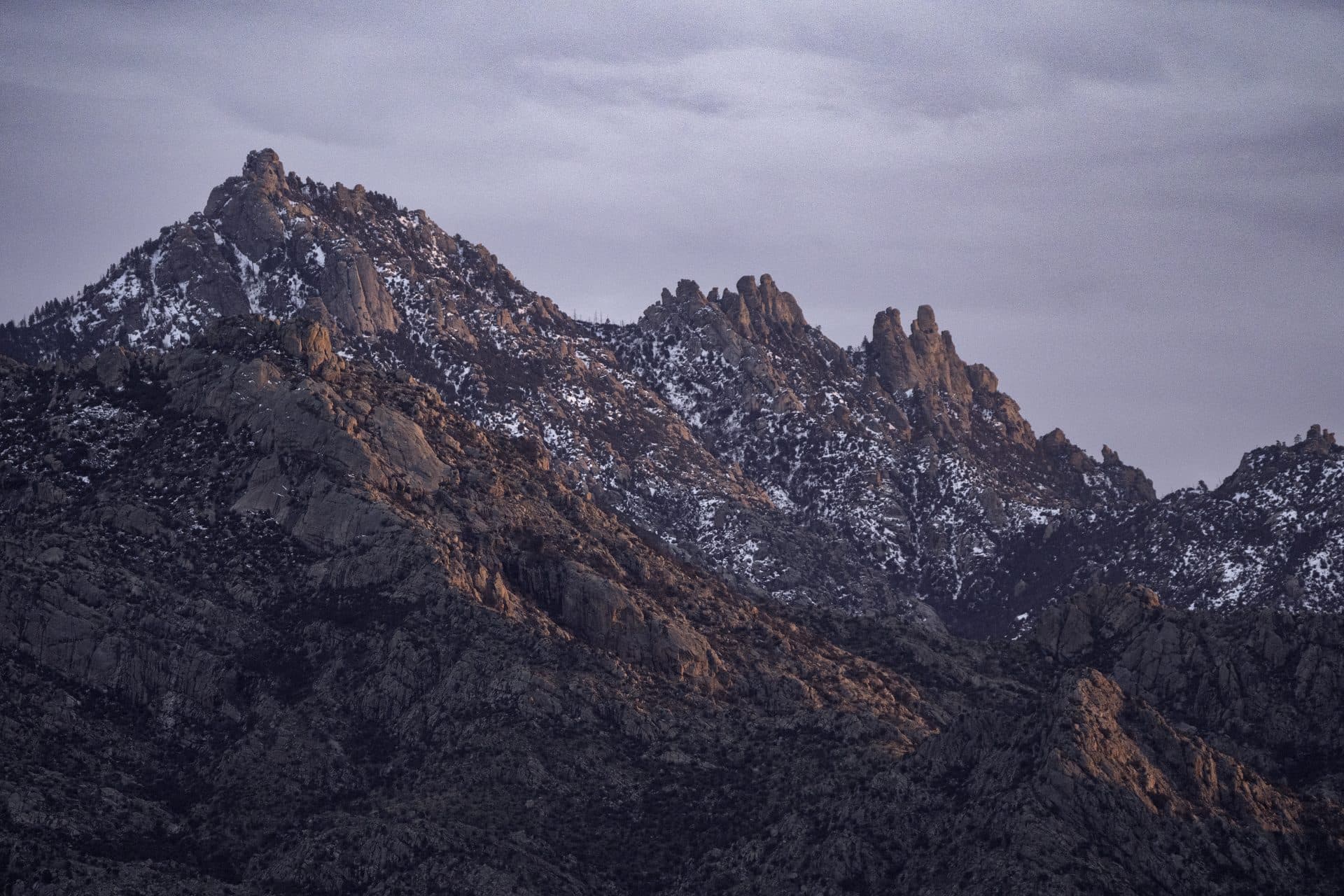
Both are hot in summer, but Tucson sits about 1,000 feet higher, which usually makes it a few degrees cooler than Phoenix and brings a more dramatic monsoon season. Tucson also stays greener and more scenic, ringed by mountains and saguaro forest, with Saguaro National Park on both sides of town. Phoenix summers run hotter and the metro is flatter and more built-out. Winters in both are glorious — the reason snowbirds flock to each.
Jobs and economy
Phoenix has the larger, more diversified job market — finance, tech, semiconductors, corporate headquarters, and rapid growth — so if you need a deep local employment market, it has the edge. Tucson’s economy is anchored by the University of Arizona, aerospace and defense (including Raytheon/RTX), a growing biotech corridor near Oro Valley, healthcare, and Davis-Monthan AFB. With remote work, many relocating buyers now choose Tucson for lifestyle and cost while keeping a Phoenix or out-of-state employer.
Lifestyle and the outdoors
Tucson punches above its weight on culture and the outdoors: it’s the first UNESCO City of Gastronomy in the U.S., with a standout food scene, plus world-class desert hiking right at the city’s edge — Sabino Canyon, Gates Pass, the Catalinas. Phoenix offers more of everything by sheer volume — bigger venues, more nightlife, more shopping — along with its own excellent hiking. It comes down to whether you want big-city breadth or Tucson’s more intimate, nature-forward pace.
Phoenix is the big metropolis; Tucson is the scenic, more affordable, more relaxed alternative. Plenty of people who tour both tell us Tucson simply felt like home.
So which should you choose?
Choose Phoenix if you want a major-metro job market, professional sports, the biggest airport, and maximum amenities, and you’re comfortable with a larger, hotter, faster city. Choose Tucson if you want lower home prices, a slightly cooler and greener setting, a laid-back college-town feel, and the desert at your doorstep. Both are in Arizona, so you get the same tax advantages either way — no tax on Social Security and a low flat state income tax. For many of our clients, Tucson delivers most of what they wanted about Arizona at a lower cost and a gentler pace.
Weighing a move between the two? If Tucson is on your list, reach out — we’ll give you a straight comparison for your budget and priorities, and if it’s the right fit, help you find the perfect neighborhood. (New to the area? Start with our Moving to Tucson relocation guide.)